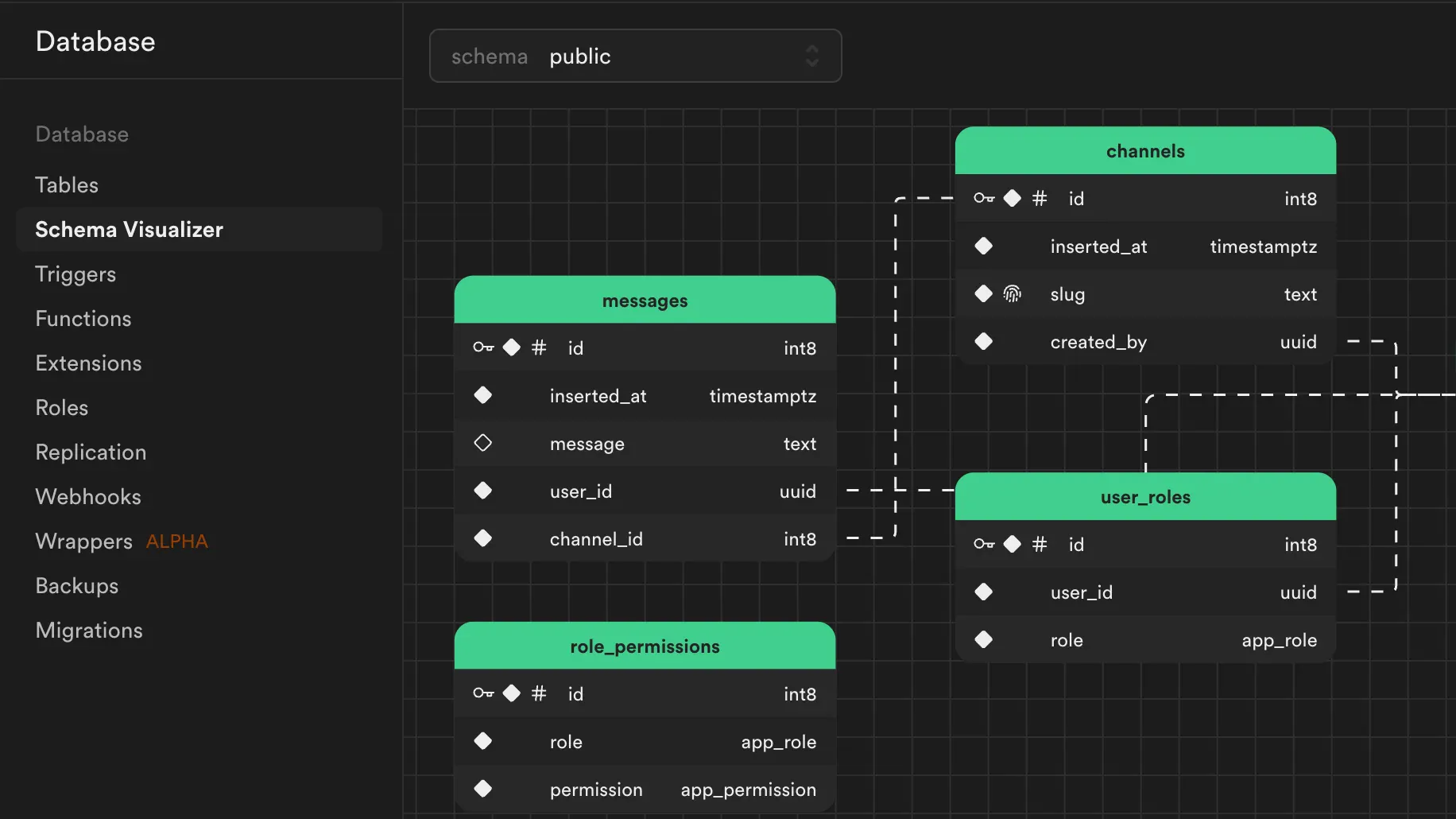
Pick Supabase when you already think in tables, SQL, admin access, and reporting. Pick Convex when your product wants reactive UI and you want your backend logic to stay in TypeScript instead of SQL-first thinking.
I see this choice get made for the wrong reason all the time.
People hear "Convex is more TypeScript-native" and stop there. Or they hear "Supabase is just Postgres" and underestimate how much that matters once the product grows teeth.
That is too shallow.
The better question is:
What kind of product behavior are you optimizing for in the first six months?
What each platform is really selling
Supabase
Supabase gives you a Postgres-centered backend with the usual pieces most product teams expect:
- Postgres as the database
- Auth
- Storage
- Row Level Security
- Edge Functions in TypeScript
That means it feels familiar if your brain already wants:
- relational data
- SQL queries
- reporting
- admin access
- direct visibility into the database
Convex
Convex feels different.
Its core model is built around application functions and reactive queries. The docs emphasize:
- queries
- mutations
- actions
- subscriptions/reactivity
- auth
- file storage
That makes it feel great when the app itself is the center of gravity and you want the backend API and client state model to feel tightly connected.
The fastest way to choose
| If this sounds like you | Better default | | --- | --- | | "I want SQL, tables, joins, admin access, and reporting I can reason about." | Supabase | | "I want the app state to feel live, reactive, and end-to-end TypeScript." | Convex | | "I know this will have dashboards, internal ops views, and data exports." | Supabase | | "I know this will have collaborative or live-updating screens all over the place." | Convex | | "I want something the wider market already understands." | Supabase | | "I want fewer mental hops between client code and backend code." | Convex |
What the official docs reinforce
From the current official docs:
- Supabase leans hard into Postgres, Row Level Security, Storage, and globally distributed Edge Functions written in TypeScript.
- Convex leans hard into typed queries and mutations, built-in reactivity, auth, and file storage.
That sounds subtle on paper. It does not feel subtle once you start building.
Where Supabase feels better
Supabase tends to be the calmer choice when:
- your data model is relational from day one
- you know you will want SQL access
- somebody on the team will eventually ask for reporting or admin queries
- you care about RLS and database-level policy control
- you want a backend other developers can read without learning a new mental model first
For a lot of startup apps, that combination is more common than people want to admit.
You might think the product is "simple CRUD" today and then suddenly you need:
- filtered admin views
- cohort analysis
- a support dashboard
- exports
- data fixes
- product metrics someone wants to answer in SQL
That is where Supabase usually feels like the more adult choice.
Where Convex feels better
Convex shines when the app wants to feel alive all the time.
It is especially compelling when:
- live updates are part of the experience, not a side detail
- you want frontend and backend logic to stay close together
- you like TypeScript everywhere
- you do not want to start from a SQL-first workflow
- you care more about shipping app behavior than about inspecting the database directly
This is why Convex gets so much love from builders doing fast iterations with AI tools. The function model is often easier to extend quickly than a more SQL-shaped backend.
That does not automatically mean it is the right answer for your app.
The wrong way to decide
"Convex is more TypeScript, so I should pick Convex"
Not enough.
If your product wants relational querying, reporting, admin access, and standard operational visibility, TypeScript alone is not the deciding factor.
"Supabase is more standard, so Convex must be risky"
Also too shallow.
If your app is deeply reactive and your team thinks in client flows first, Convex can feel simpler and faster than trying to bolt realtime expectations onto a SQL-first mental model.
My practical rule of thumb
Pick Supabase if:
- you want SQL
- you want direct database access
- you expect internal reporting or ops workflows
- you want a backend many developers already understand
- you care about policy control at the database layer
Pick Convex if:
- live, reactive UI is central to the product
- you want the backend to feel like an extension of your app code
- end-to-end TypeScript matters more than direct SQL access
- you want to move fast without constantly context-switching into database-first thinking
How this maps inside Shipnative
Shipnative supports both, which is the right move because these backends serve different personalities.
Here is how I would choose inside this product:
Shipnative + Supabase
Use this when you are building:
- SaaS products with subscriptions and admin views
- marketplaces
- products that will need reporting quickly
- apps where SQL and policy control are part of the long-term picture
Shipnative + Convex
Use this when you are building:
- collaborative features
- live feeds
- products where the app behavior is evolving fast
- teams that want the backend to stay close to TypeScript and product logic
The human version of the recommendation
If I were building a standard subscription product with dashboards, admin needs, and a founder who will absolutely ask for reporting in month two, I would pick Supabase and never feel bad about it.
If I were building something more reactive and product-led, and I wanted the backend to feel lighter and closer to the app code, I would give Convex a serious look.
What I would not do is pick Convex just because it sounds cleaner in an AI prompt.
That is how people end up with a nice demo choice instead of the right product choice.
If you want that logic turned into a recommendation, use the React Native boilerplate chooser.
If you want to see how the broader starter decision fits around this backend choice, read Best React Native Boilerplate in 2026.
Choose the backend based on product shape, not hype
Shipnative lets you start with Supabase or Convex. The right answer depends less on slogans and more on the kind of product you are actually building.
Get Started Now